
Absence Percentage Calculator

Absence Percentage Calculator
Calculate your organization’s absenteeism rate
Formula: (Total Days Absent ÷ (Total Employees × Total Workdays)) × 100
An Absence Percentage Calculator helps you quickly find the absence rate without complicated math. Instead of doing manual math, you can quickly find the exact percentage of days missed during a specific period. Just enter the total number of employees, total number of working days and the number of days missed. Our Absence rate calculator tool instantly shows your percentage.
Attendance record might not seem like a big deal to let a day or two slip by. But over time, it can potentially start to have an impact on how well a student performs in class or how much progress an employee can make at work as it directly affects their grades and performance.
Key Takeaways
- Absence percentage is calculated using the formula: total days absent ÷ (employees × workdays) × 100.
- Only unplanned absences count — approved leave, vacations, and public holidays are excluded from the rate.
- An absenteeism rate of 1–3% is considered normal; anything above 5% may need immediate attention.
- Tracking absenteeism helps HR spot workload issues, low morale, and poor workplace conditions early.

What Is an Absence Percentage?
Absence percentage shows how often someone was not present during a specific time.
This monthly attendance tracker is used by HR in the Companies to measure absenteeism rate. Schools use it to track attendance. Business owners and team leads rely on an absenteeism rate calculator to monitor workforce trends.
Absenteeism Formula
The basic absenteeism formula is:
Absence Percentage rate = Total days absent / (Total employees × Number of workdays) × 100
If you are searching for:
- How to calculate absence percentage
- How to calculate absenteeism rate
- How to calculate absenteeism percentage
- How to calculate sickness absence rate
This attendance calculator formula gives you the answer.
How to Calculate Absence Percentage?
Calculate absenteeism and see how it affects the payroll system of the companies, educational systems, etc. with our Payroll Calculator.
Step-by-Step calculation:
- Count total working days in the period.
- Count total number of employees
- Count total days absent.
- Multiply Number of employees and Number of workdays
- Divide absent days by this.
- Multiply the result by 100.
Example:
If a company has 50 employees, missed 3 days out of 22 working days:
This means the absenteeism rate is 0.2727%.
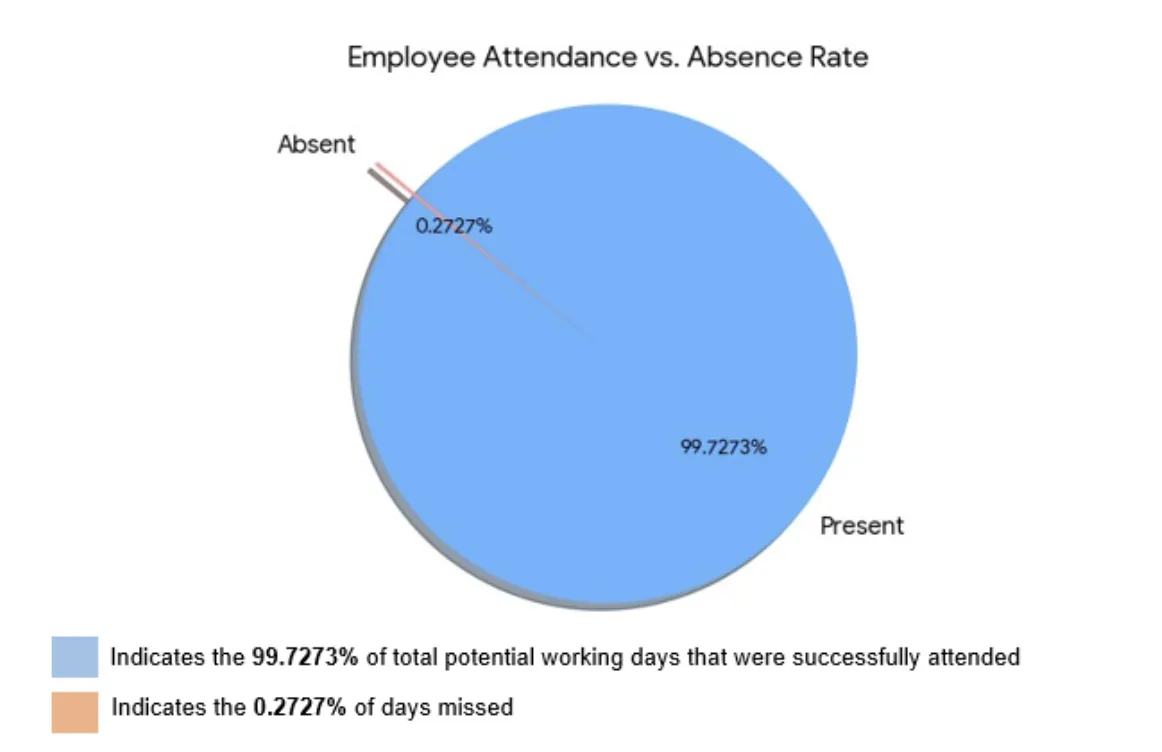
You can also use it as a monthly attendance percentage calculator to track performance every month.
Check out our Bradford Factor Calculator
What Counts as Absenteeism?
Not every day off is counted as absenteeism. Planned leave such as vacations, public holidays, or approved personal days are usually not included in the calculation. Absenteeism normally refers to unplanned absences.
These can happen due to:
- Illness or health problems
- Extreme tiredness or weakness
- Childcare or eldercare responsibilities
- Transport or travel problems
- Family emergencies
- Personal matters
- Burnout or stress
- Low morale
- An unhealthy or toxic work environment
When using an Absence Percentage Calculator, only these unexpected absences are included to measure the true absenteeism rate.
Why Tracking Absenteeism Matters?
Measuring absence is not just about watching employees closely. It helps you understand your company better.
By reviewing your absenteeism rate, you can learn:
- If employees have enough sick leave
- If workloads are too heavy
- If morale is low
- If workplace conditions need improvement
You can calculate absence for the entire organization or focus on one employee. When measured for an individual, it is often called the employee absence rate or employee absenteeism rate.
Most business owners first review the overall company rate. If the number is high, they may then check individual cases to understand the cause.
Learn more about Additional Funds Needed Calculator
Why Use an Absence Percentage Calculator?
Here are the main benefits:
Improves Workforce Planning
If absenteeism is high, managers can adjust schedules and workloads.
Reduces Productivity Loss
Frequent absences can slow down projects. Tracking helps prevent long-term damage.
Saves Time
No manual calculations needed, everything will be calculated easily which saves time.
Reduces Errors
Avoid mistakes in applying the absenteeism formula.
Tracks Performance
Monitor employee or student attendance clearly.
Helps HR Decisions
Understand trends using an absenteeism rate calculator.
Supports Planning
Know how much absenteeism is acceptable and take action if needed.
How Much Absenteeism Is Acceptable?
According to the Bureau of Labor Statistics, the national average absence rate for full-time workers is 3.2%. Most companies think that it is okay if the absenteeism rate is between 1% to 3%. This is what a lot of people consider to be an absenteeism rate for companies.
In most companies, an absenteeism rate between 1% to 3% is considered normal.
Anything above 5% may need attention.
Absence Rate Comparison
However, acceptable levels depend on company policy, industry, and local regulations.
Discover Average Collection Period Calculator
Final Thoughts
Tracking absence is important for students, employees, and businesses. Use an absence percentage calculator. It gives quick and accurate results, so you won’t have to guess or do manual math. It helps you understand patterns, improve attendance, and make better decisions.
FAQs
What is an Absence Percentage Calculator?
An Absence Percentage Calculator is a tool that calculates the percentage of days missed compared to total working days.
How do I calculate absenteeism percentage?
Use the absenteeism formula:
Absence Percentage rate = Total days absent / (Number of employees × Number of workdays) × 100
Is this the same as an absenteeism rate calculator?
Yes. An absenteeism percentage calculator and absenteeism rate calculator work in the same way.
Can I calculate sickness absence rate with this?
Yes. If you only count sick days, you can use the same formula for how to calculate sickness absence rate.
